S M G
S M G
S M G

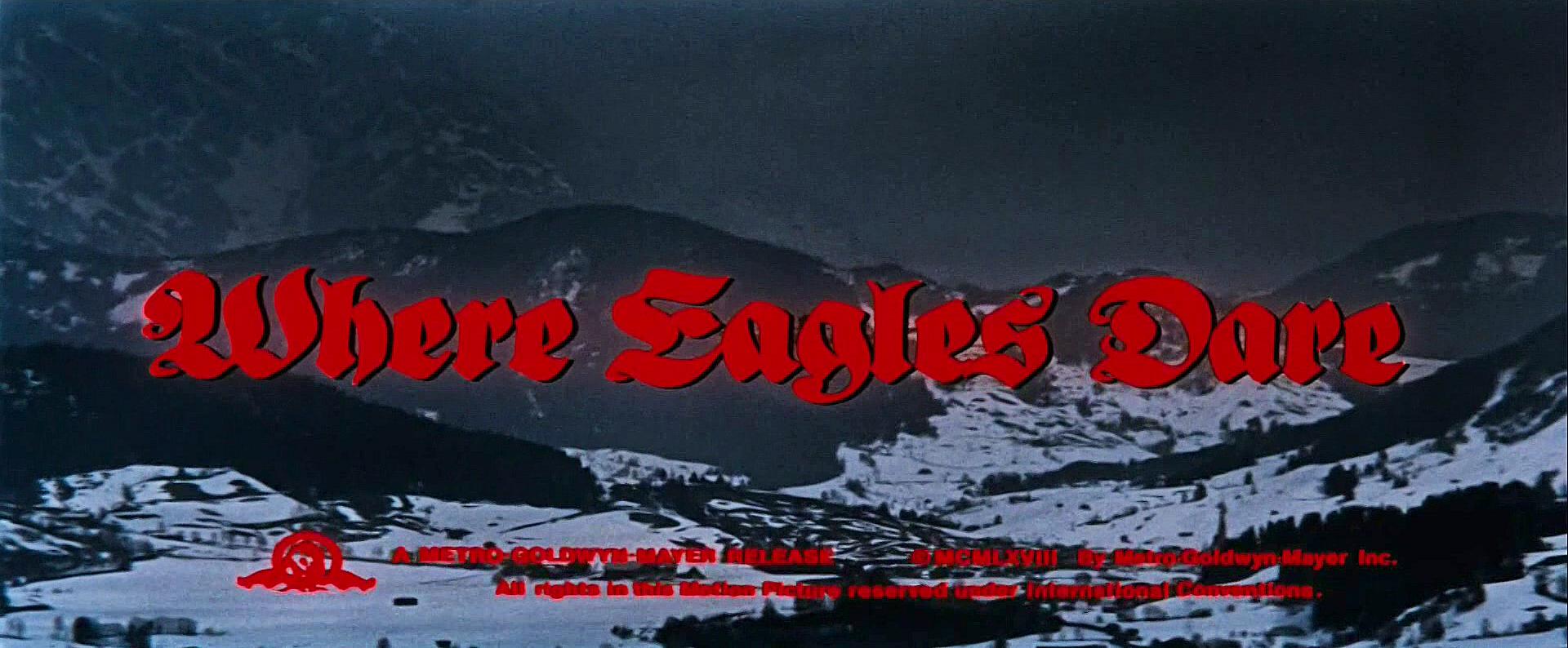
“The world is grown so bad, that wrens make prey where eagles dare not perch” – Richard III (William Shakespeare)
From the opening whispered ‘rat tat tat’ of the snare drums gradually increasing to a crescendo and the brassy main theme kicking in as a Junkers 88 roars over the mountaintops towards us over snow topped mountains, you know you’re in for something special. Ron Goodwin’s score hits us in the face with its intensity as the title of the movie swells as if unstoppably rushing towards us, in blood red Teutonic font. There is just no doubt at this point that you’re in for a treat, and the heart rate has undoubtedly increased a little. And we’re only a minute in to the movie.
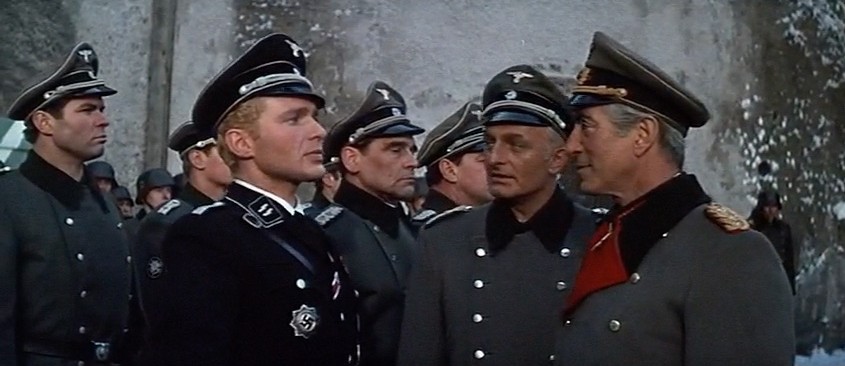
What follows is one of the best movies using Alister Maclean for source material, indeed some have argued one of the best war movies, of all time. Not the best because it’s the most realistic (it’s not, its quite preposterous at times), but the best because of just how entertaining it is. It’s combination of pre Vietnam cynicism, and yet made long enough after the war that there was no guilt at using Nazi’s as target practice on an industrial scale, made this a commercial hit, even while critics were being unkind.
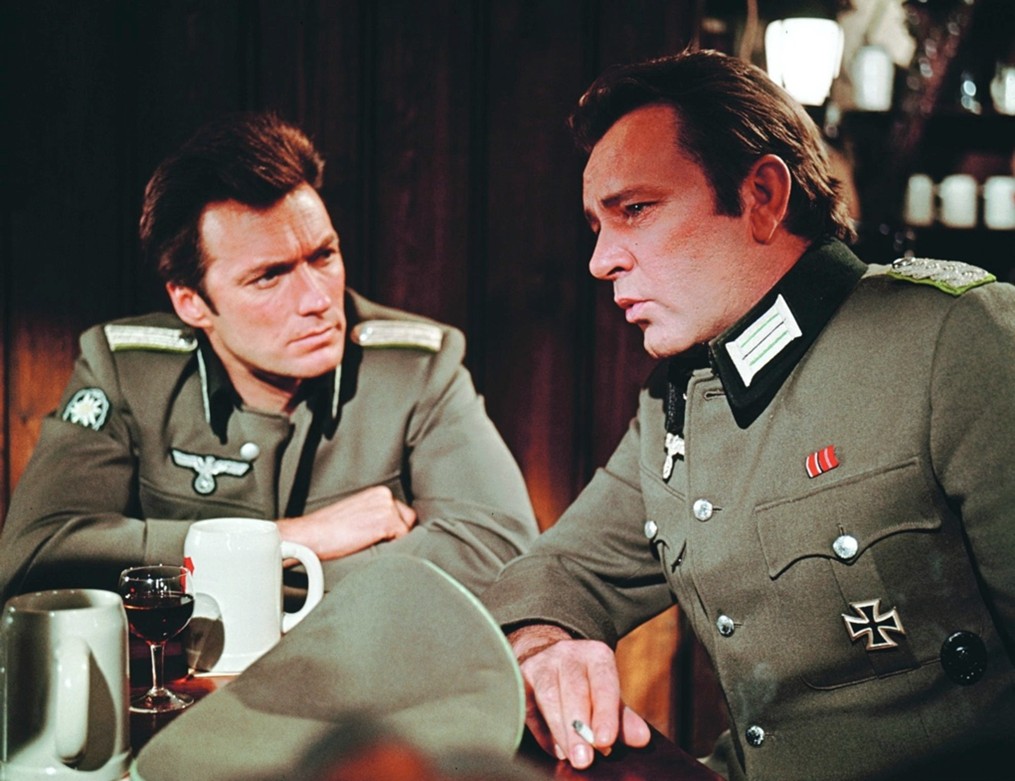
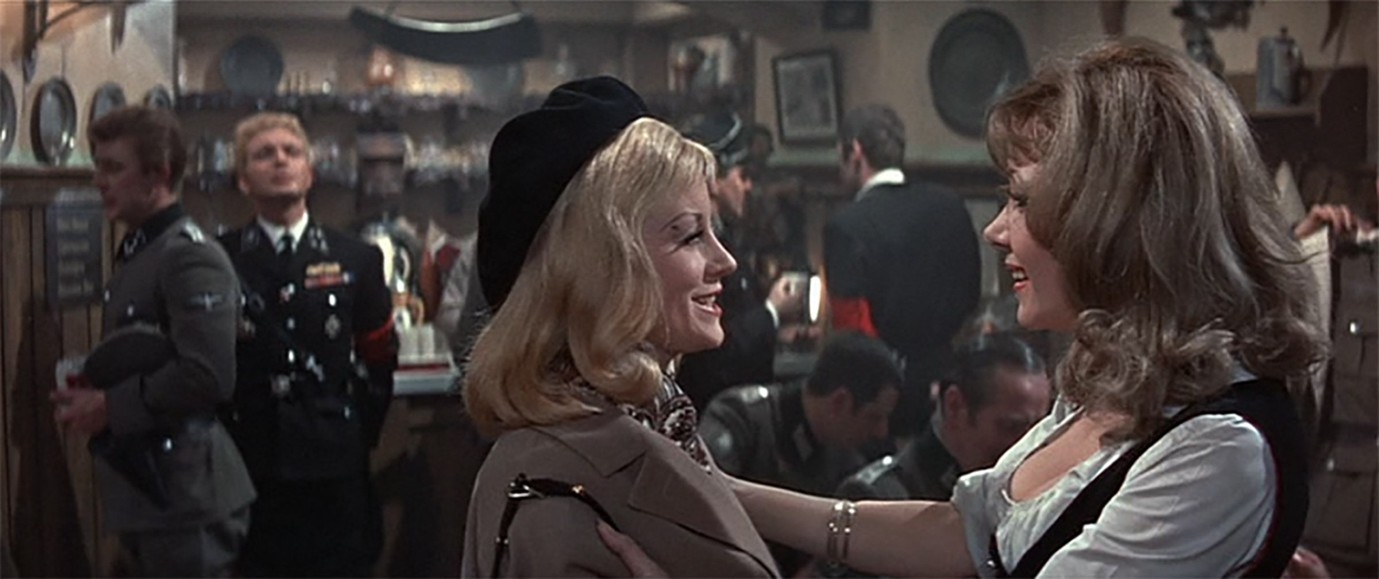
So how did it come about? Well, we have Richard Burton’s stepson to thank for that. He complained that his stepdad was only ever in boring stagey movies and wanted to see him in a good old fashioned adventure movie. Burton liked the idea, and approached legendary producer Elliott Kastner, who in turn approached novelist Alistair Maclean. Maclean already had several of his movies made into hit films (Guns of Navarone, The Satan Bug, Ice Station Zebra), but this was the first time he had been asked to write a screenplay. In the event he delivered the screenplay, and simultaneously started writing the novel of the same story, which he completed after the screenplay. The shoot itself took place mostly in Austria at the Schloss Hohenwerfen, and the movie soon became known by its two main stars, Burton and Eastwood, as ‘Where Doubles Dare’ due to the time they spent waiting for their action doubles to complete scenes. Many of the stunts were performed by Alf Joint, who was already famous from doubling Sean Connery in Goldfinger and On Her Majesty’s Secret Service (if you remember the fight at the beginning of the Goldfinger which ends with Bond throwing a lamp into the bath with his attacker to electrocute him – the electrocuted guy is Alf Joint). Burton was paid over a million dollars for the role, and Eastwood 800,000 USD, but the other actors in the movie are also memorable. Mary Ure as the blonde bombshell who has to infiltrate the castle as, well, yes, as a domestic, had a career which spiraled after this movie due to poor mental health and alcoholism, and after a disastrous opening night of the Exorcist stage production, was found dead by her then husband Robert Shaw, having committed suicide. Ingrid Pitt made a rare ‘goodie’ here, normally being cast in Hammer House of Horror movies where she invariably died in bloody fashion in the last reel. Here she plays the busty wench at the local tavern.. “and.. what a disguise” as Burton says.
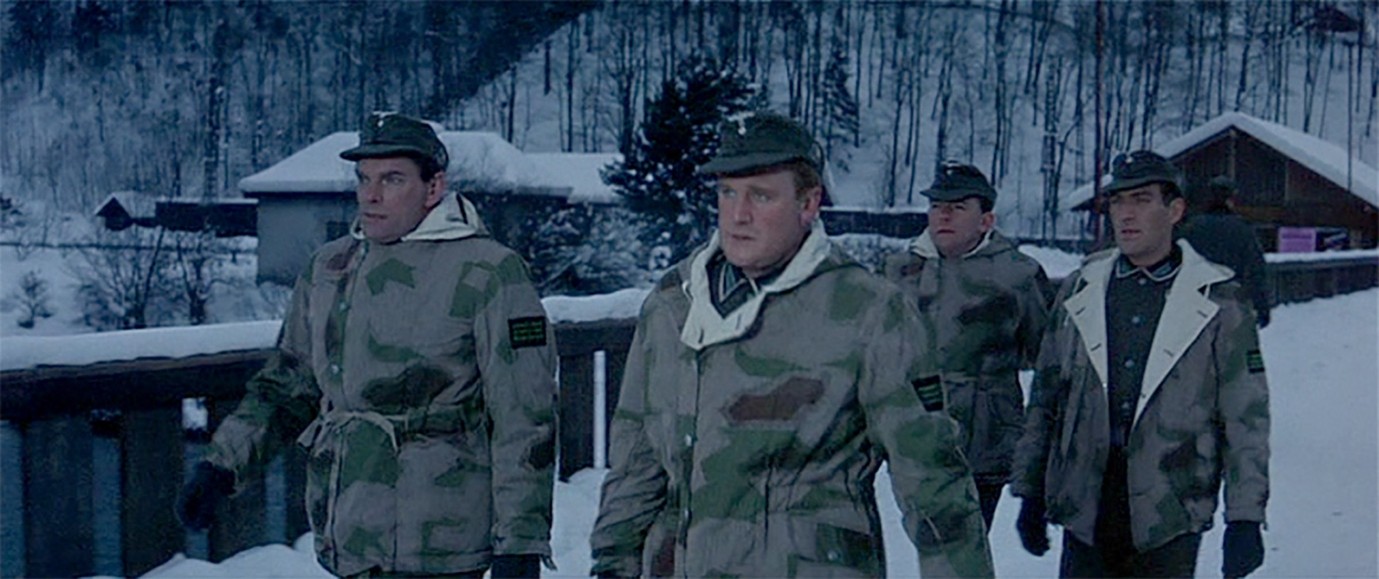
Although some of the effects might look dated now, the cable car scene was revolutionary, in that it was the first instance of front projection, which has now evolved into so called ‘green screen’ technology. Other major contributors included legendary stuntman Yakima Kanutt directing the second unit action scenes, and special mention to Ron Goodwin, who composed the memorable score. When asked about his inspiration for the music, he said that he saw his job as merely having music loud enough to be heard above the constant explosions and machine gun fire!
Artistically, it’s perhaps not an easy movie to defend, but who cares when it’s this much fun, and its aesthetic and tone have been emulated and homage countless times (Inglorious Basterds pub scene and the game Castle Wolfenstein to name but a few).
“Broadsword calling Danny Boy.. Broadsword calling Danny Boy, over..”. if that brings a smile to your face then you’re already familiar with this cult favourite of a movie, if not – fasten your seatbelts for a rip roaring, action packed Boy’s Own style adventure (n.b. it has the highest body count of any Clint Eastwood movie!). Have the years been unkind? Is it past its sell-by date? Watch it again, or for the first time, and make up your own mind!
Oh.. and if you’ve seen the movie already.. surely the Cathedral was on the OTHER side of the square..?
Trivia
Despite Clint Eastwood's reputation for violence in other films, his character kills more people in this film than any other Eastwood character.
The Junkers Ju 52 used in the film was still in use with the Swiss air force at the time. The Swiss also supplied the T-6 Texan trainers posing as "German fighters."
In the scenes where Richard Burton and Clint Eastwood climb the steep fortress walls, Burton moves with ease, while Eastwood is clearly working hard physically. This was due to the fact that Burton, who was a hard-drinker and out-of-shape by that point, chose to ride a crane (made invisible by special effects) up the wall, whereas the young, healthy Eastwood was actually climbing the wall.
The castle, Schloss Hohenwerfen, is today open to the public and is a falconry. Other than the exterior, the only feature that will be familiar to movie fans is the courtyard.
In a Channel 4 (UK) survey of the top 100 war movies Steven Spielberg voted this as his favorite, mainly due to its sheer "boys own" factor of unreality. He even went so far as to repeat the "Broadsword calling Danny Boy" line.
According to a special feature about this film, Ingrid Pitt, who plays Heidi, made a daring escape in real life, over the Berlin Wall.
The part that ultimately went to Clint Eastwood was also offered to Lee Marvin, but he declined, telling the producers they were about 4 years too late. Marvin had already starred in a WW2 action-adventure, The Dirty Dozen, which he hated. Although it made him a huge star, he did not want to return to that type of movie.
Nazi concentration camp survivor Ingrid Pitt found filming very difficult because many of the cast were wearing World War II German army uniforms.
Derren Nesbitt was nearly blinded when the squibs in his chest blew upwards instead of outwards when filming his death scene - his character was filmed being shot in the head and the chest but in the finished film he is only shot in the head.
© Stephen's Movie Guide
Inverurie Website Design